


Warning Signs
Road signs are divided into 8 groups:
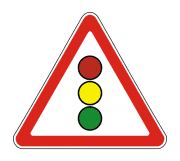 1. Warning | 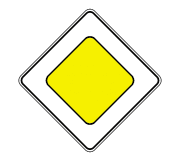 2. Priority | 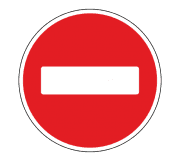 3. Prohibitory | 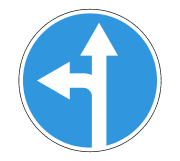 4. Mandatory |
 5. Special Regulations |  6. Information |  7. Service |  8. Additional Information |
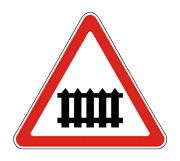
1.1. "Railway crossing with barrier"
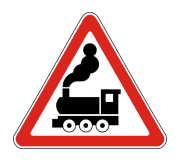
1.2. "Railway crossing without barrier"
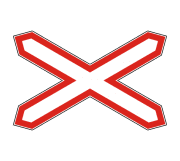
1.3.1. "Single-track railway"
designation of a railway crossing without a barrier with one track

1.3.2. "Multi-track railway"
designation of a railway crossing without a barrier with two or more tracks

1.4.1. "Approaching a railway crossing"
additional warning about approaching a railway crossing outside built-up areas;
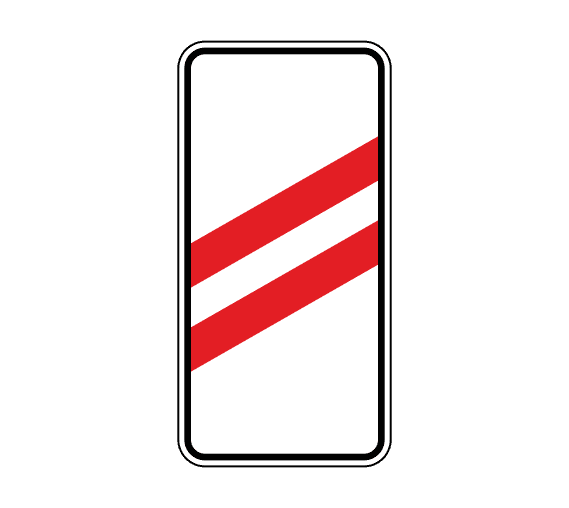
1.4.2. "Approaching a railway crossing"
additional warning about approaching a railway crossing outside built-up areas;
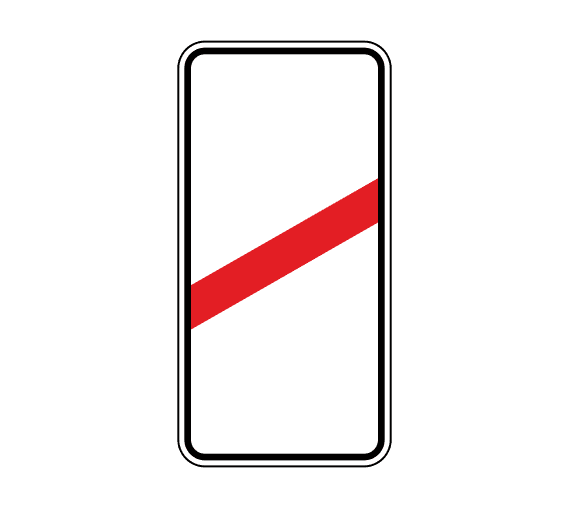
1.4.3. "Approaching a railway crossing"
additional warning about approaching a railway crossing outside built-up areas;
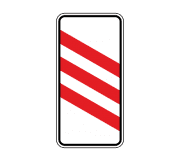
1.4.4. "Approaching a railway crossing"
additional warning about approaching a railway crossing outside built-up areas;
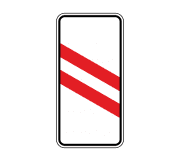
1.4.5. "Approaching a railway crossing"
additional warning about approaching a railway crossing outside built-up areas;
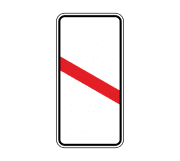
1.4.6. "Approaching a railway crossing"
additional warning about approaching a railway crossing outside built-up areas;
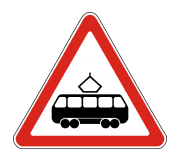
1.5. "Intersection with tram tracks"

1.6. "Intersection of equal-priority roads"
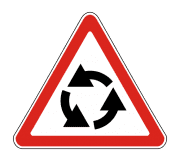
1.7. “Roundabout ahead”
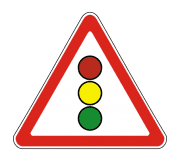
1.8. “Traffic signals”
intersection, pedestrian crossing or section of road where traffic is regulated by a traffic light
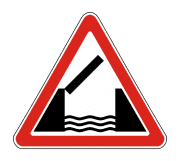
1.9. "Drawbridge"
drawbridge or ferry crossing
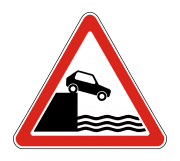
1.10. “Quayside or riverbank”
a quayside or place where the road leads onto a shore
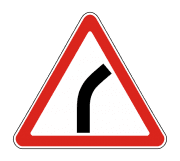
1.11.1. "Dangerous bend"
curving of the road with a small radius or limited field of view, to the right
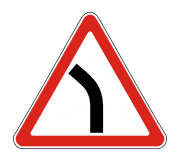
1.11.2. "Dangerous bend"
curving of the road with a small radius or limited field of view, to the left
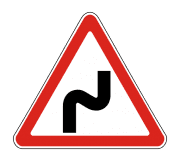
1.12.1. "Dangerous bends"
section of road with dangerous bends—the first bend to the right
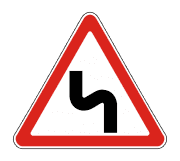
1.12.2. "Dangerous bends"
section of road with dangerous bends—the first bend to the left.
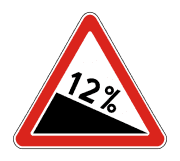
1.13. "Steep descent"
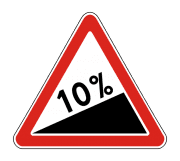
1.14. "Steep ascent"
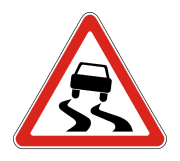
1.15. "Slippery road"
Slippery road ahead
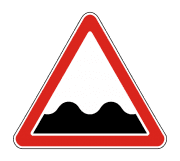
1.16. “Uneven road”
a section of road with an uneven surface (bumps, dips, bridge joints, etc.)
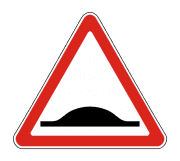
1.17. "Speed bump"
section of road with a speed bump (bumps) for the compulsory reduction of speed
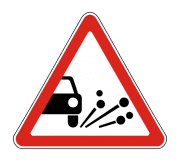
1.18. “Loose chippings”
a section of road where gravel, stone fragments or similar material may be thrown up by vehicle wheels
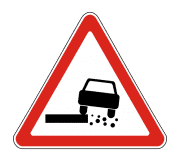
1.19. “Dangerous shoulder”
section of road where driving onto the shoulder is dangerous.
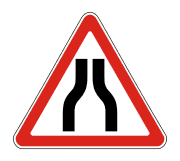
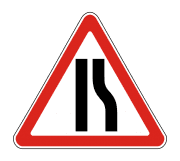
1.20.1. "Road narrows"
narrowing from both sides.
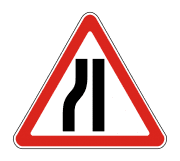
1.20.2. "Road narrows"
narrowing from the right.
1.20.3. "Road narrows"
narrowing from the left.
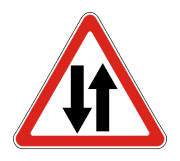
1.21. "Two-way traffic"
beginning of a section of road (carriageway) with oncoming traffic.
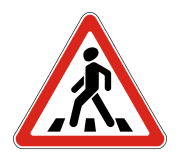
1.22. "Pedestrian crossing"
5.19.1 and 5.19.2 "Pedestrian crossing"—pedestrian crossing indicated by signs and (or) by road marking 1.14.1—1.14.2
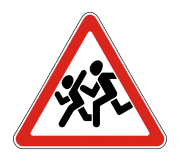
1.23. "Children"
Children crossing—section of road passing near schools, kindergartens, etc., where the appearance of children on the carriageway is possible.
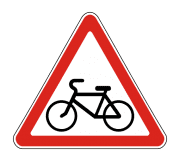
1.24. "Intersection with a bicycle path"
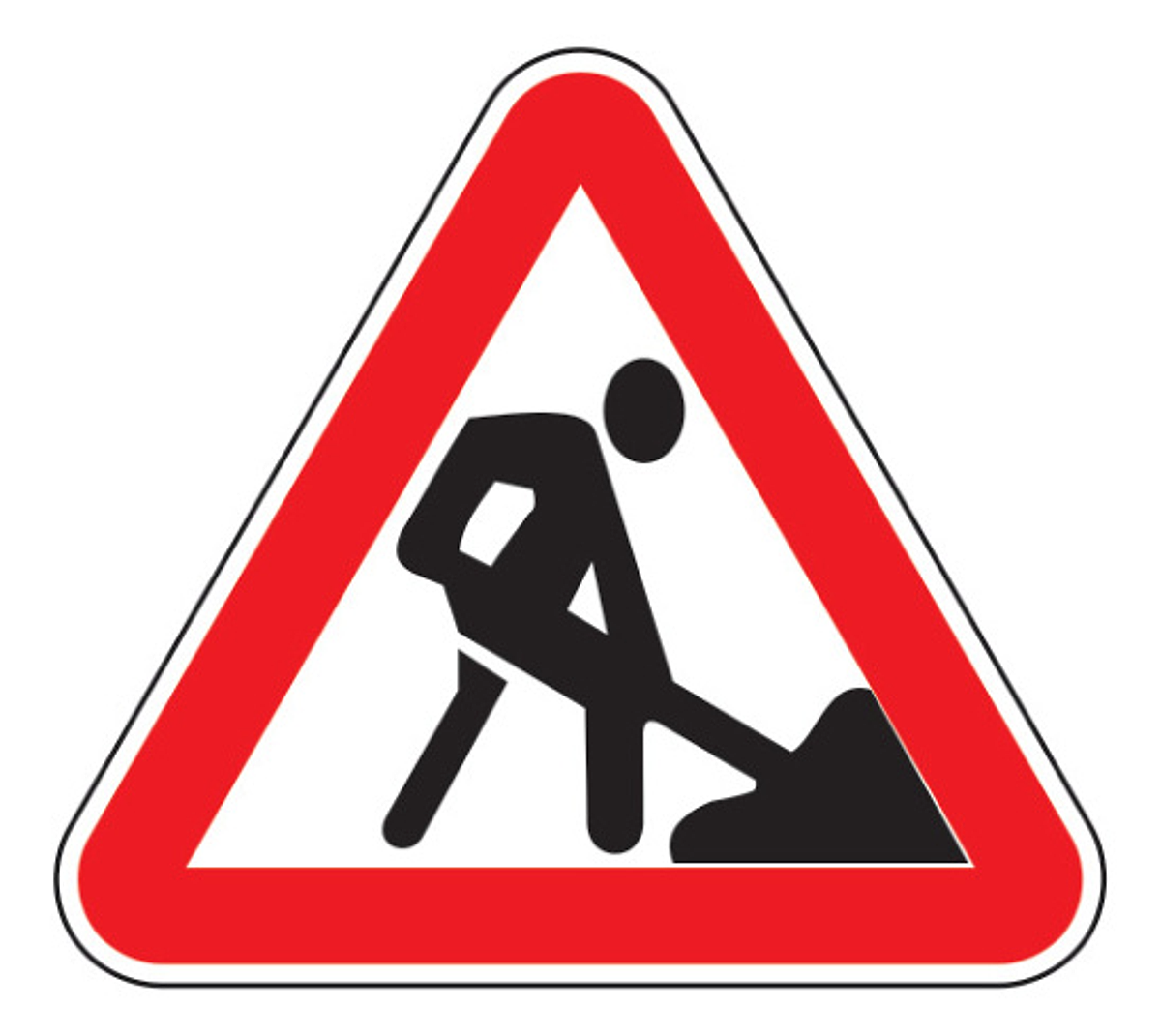
1.25. "Road works"
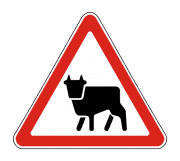
1.26. "Cattle crossing"
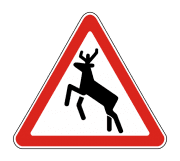
1.27. "Wild animals"
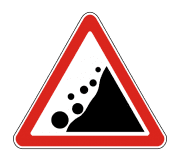
1.28. "Falling stones"
section of road where collapses, landslides, and falling stones are possible.
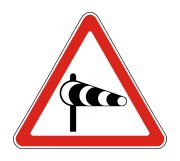
1.29. "Crosswind"
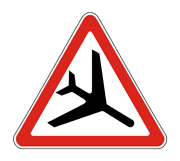
1.30. "Low-flying aircraft"
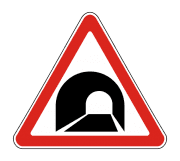
1.31. "Tunnel"
a tunnel where artificial lighting is absent, or a tunnel with limited tunnel visibility
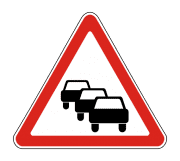
1.32. "Congestion"
section of road where a congestion has formed

1.33. "Other dangers"
section of road where dangers not provided for by the listed warning signs are present
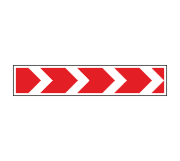
1.34.1. “Direction of turn"
direction of travel on a small-radius curve of a road with limited visibility, to the right
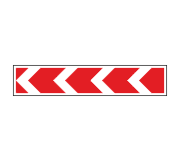
1.34.2. “Direction of turn"
direction of travel on a small-radius curve of a road with limited visibility, to the left.
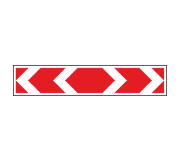
1.34.3. “Direction of turn"
directions of travel at a T-intersection or at a road junction; directions for bypassing a section of road under repair.
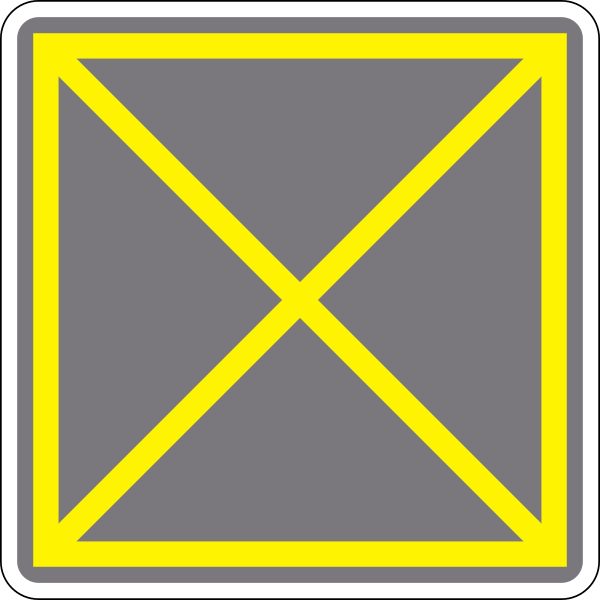
1.35. “Intersection area”
Designates approaching an intersection, the area of which is marked with road marking 1.26, and in which it is prohibited to enter if a congestion has formed ahead in the direction of movement, which will force the driver to stop—creating an obstruction for the movement of vehicles in the transverse direction along the crossing road, with the exception of cases of performing a right or left turn provided for by these Rules.
Sign 1.35 is placed at the boundary of the intersection. If at complex intersections it is not possible to place the road sign at the boundary of the intersection, then it is placed at a distance of no more than 30 m from the boundary of the intersection.
Warning signs 1.1, 1.2, 1.5—1.33 are placed outside a built-up area at a distance of 150—300 m from the dangerous location, and within a built-up area—at a distance of 50—100 m. Where necessary, the signs may also be placed at other distances, which in this case is indicated by plate 8.1.1.
Signs 1.13 and 1.14 may be placed without plate 8.1.1 at the start of an ascent or descent, if the ascent and descent immediately follow one another.
Sign 1.25, when carrying out urgent short-term repair works on the carriageway, may be placed without plate 8.1.1 at a distance of 10—15 m before the location of the repair works.
Sign 1.32 is used as a temporary sign or on variable-message signs before an intersection from which the congested section of road can be bypassed.
Outside a built-up area, signs 1.1, 1.2, 1.9, 1.10, 1.23 and 1.25 are repeated; the second sign is placed at a distance of no less than 50 m from the dangerous location. Signs 1.23 and 1.25 are also repeated within a built-up area before the dangerous section.