


Vehicle Identification Signs
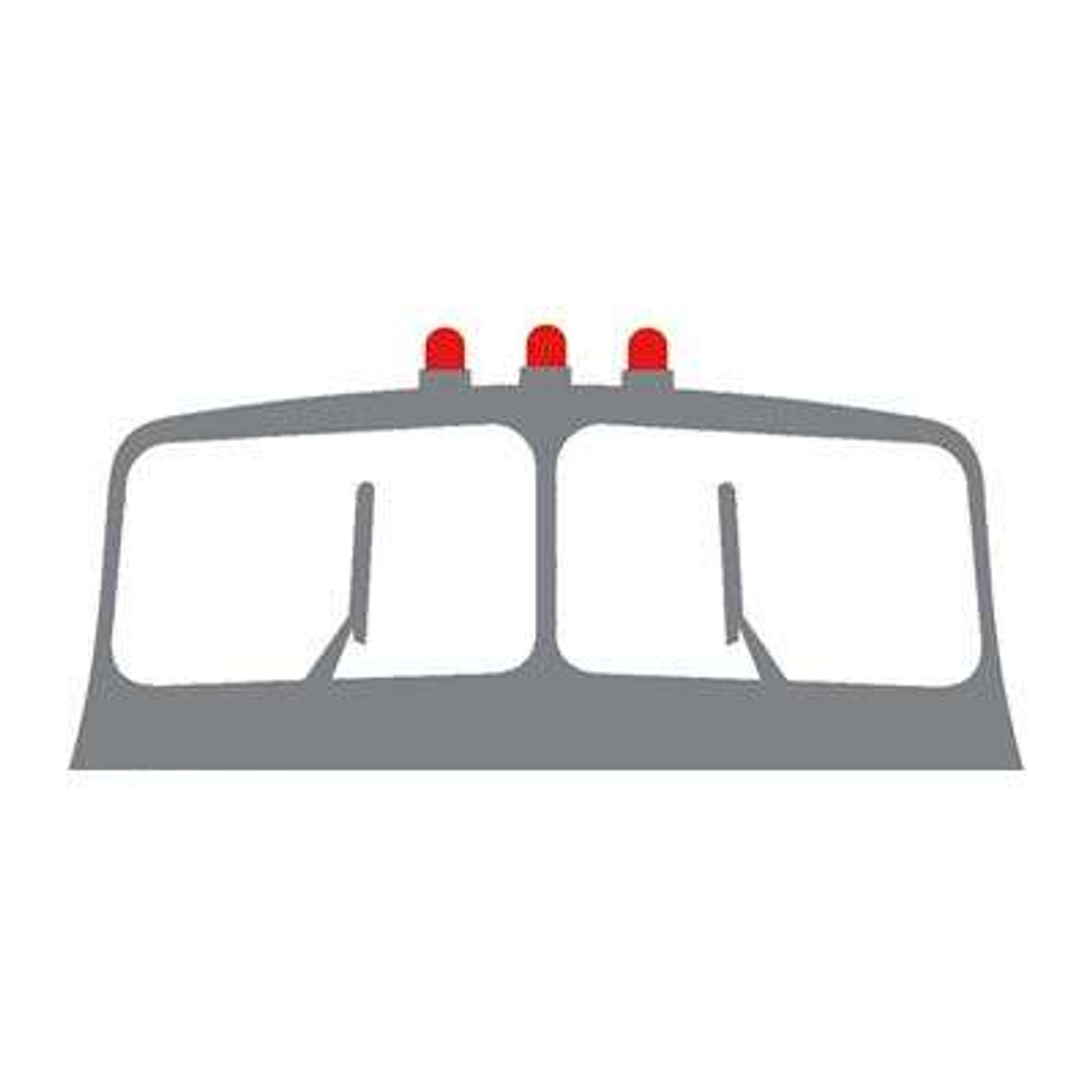
“Road train”
Consists of three amber lamps arranged horizontally 150–300 mm apart on the cab roofs of lorries with trailers and wheeled tractors of class 1.4 t and above, and on the front part of the roof of articulated buses and trolleybuses.
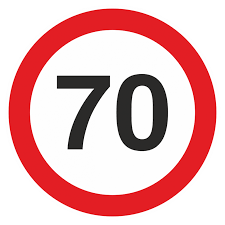
“Speed limit”
Installed on the rear left side of vehicles used for the organised transport of groups of children, vehicles carrying dangerous, heavy or oversized loads, and vehicles whose design speed is below the speeds prescribed by points 69 and 71 of the Rules. It shows the permitted speed in the form of sign 3.24 “Maximum speed limit” (diameter: at least 160 mm; border width: one tenth of the diameter).
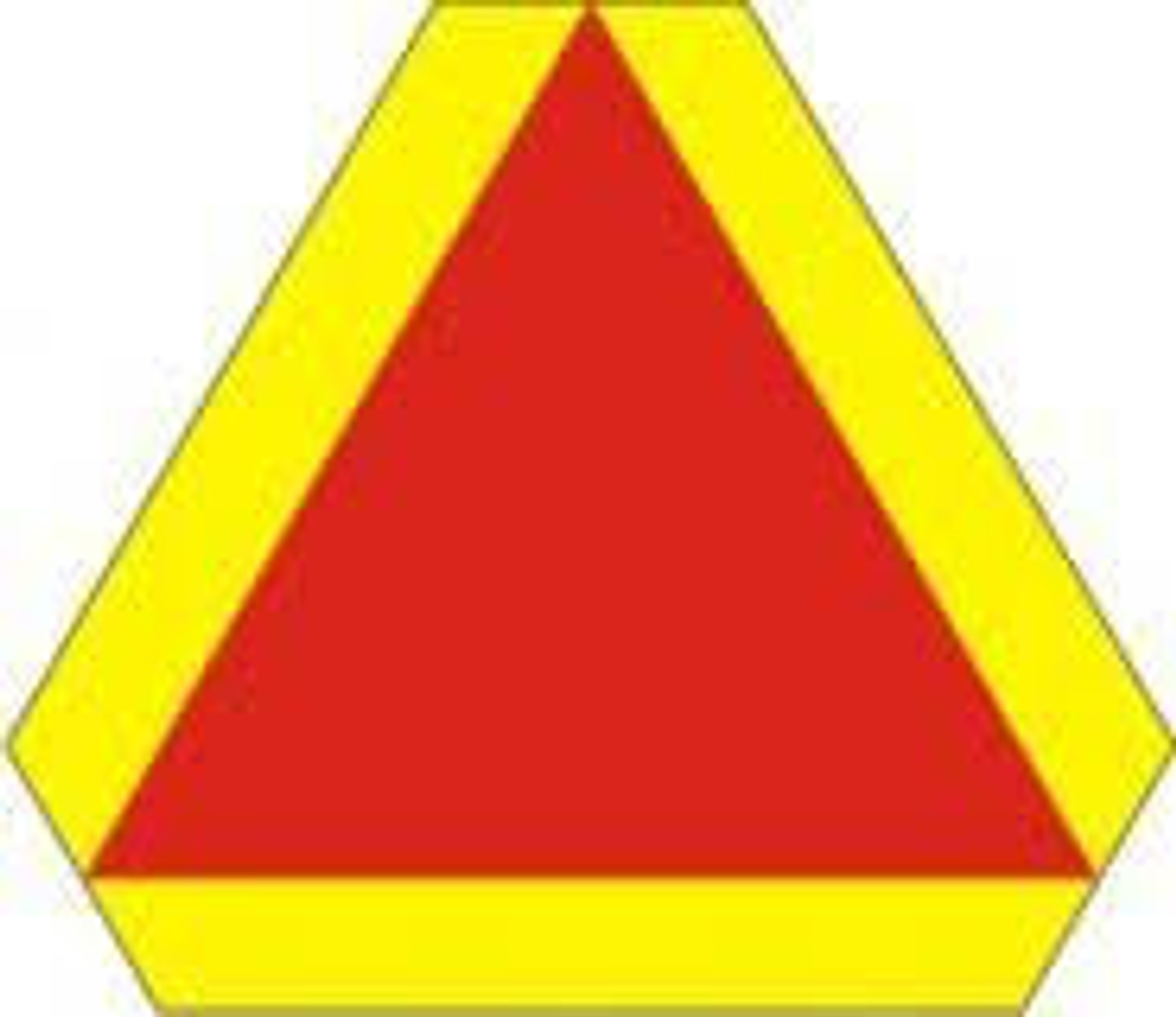
“Slow-moving vehicle”
Installed on the rear of motor vehicles whose manufacturer-specified maximum speed is 30 km/h. It is an equilateral triangle with a fluorescent red surface and a retroreflective yellow or red border (side length: 350–365 mm; border width: 45–48 mm).
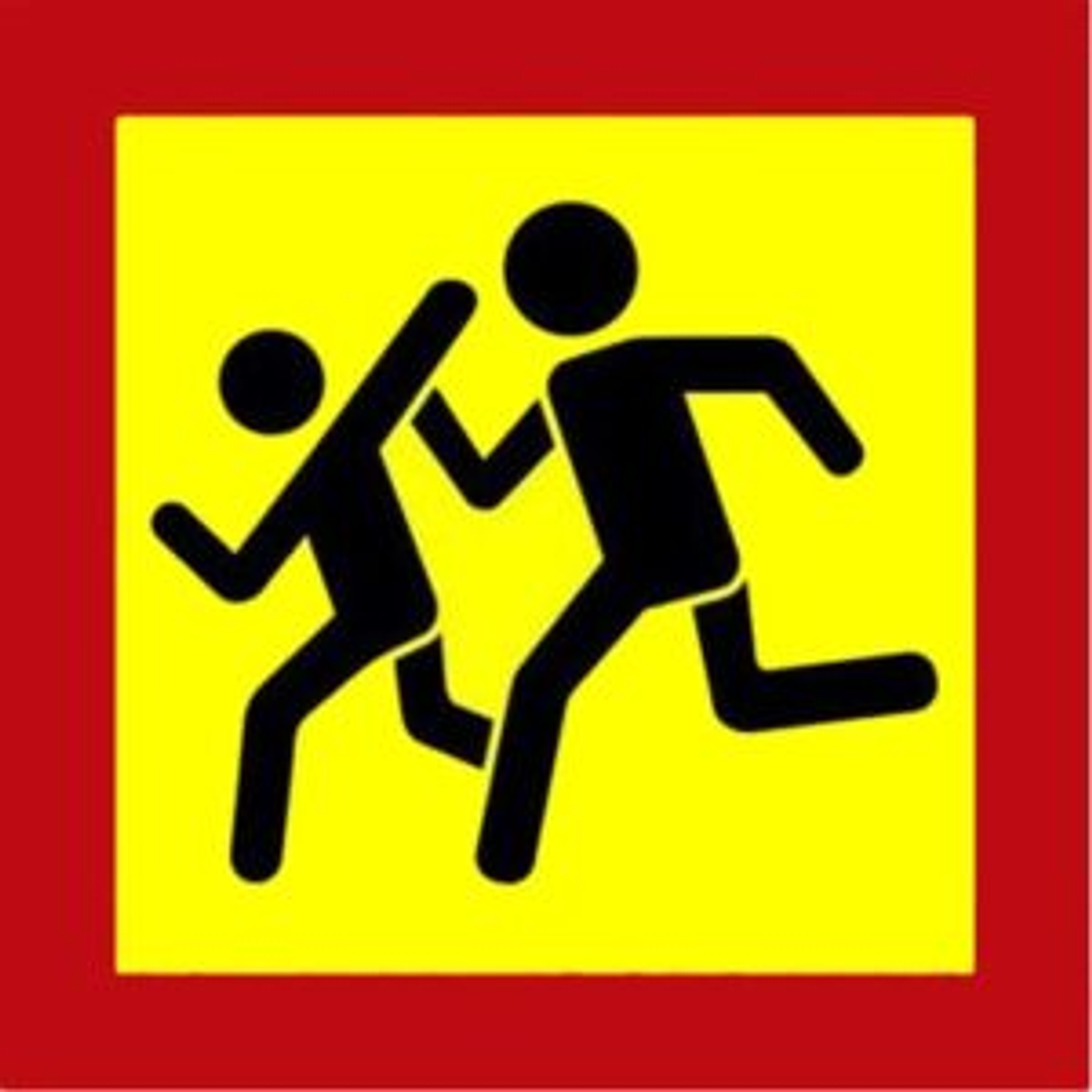
“Transportation of children”
Installed on the front and rear of vehicles used for the organised transport of groups of children. It is a yellow square with a red border bearing the symbol from sign 1.23 “Children” (side length: at least 250 mm; border width: one tenth of the side).
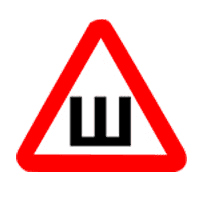
"Spikes"
Installed on the rear of motor vehicles fitted with studded tyres. It is a white equilateral triangle pointing upwards, with a red border and the Cyrillic symbol “Ш” (side length: at least 200 mm; border width: one tenth of the side).
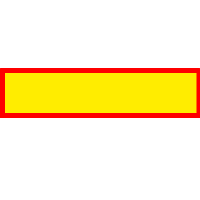
"Long vehicle"
Installed on the rear of vehicles longer than 20 m, with or without a load, and road trains with two or more trailers, irrespective of their length. It is a yellow rectangle with a retroreflective surface and a red border (dimensions: at least 1200 × 200 mm; border width: 40 mm). If a sign of those dimensions cannot be installed, two identical signs measuring at least 600 × 200 mm may be mounted symmetrically about the vehicle’s longitudinal axis.

"Deaf driver"
Installed on the front and rear of motor vehicles driven by deaf or deaf-mute drivers. It is a yellow circle containing three small black circles positioned at the corners of an imaginary equilateral triangle pointing downwards (sign diameter: 160 mm; diameter of each small circle: 40 mm).

"Oversized cargo"
A board with a retroreflective surface and alternating diagonal red and white stripes (dimensions: 400 × 400 mm; stripe width: 50 mm).
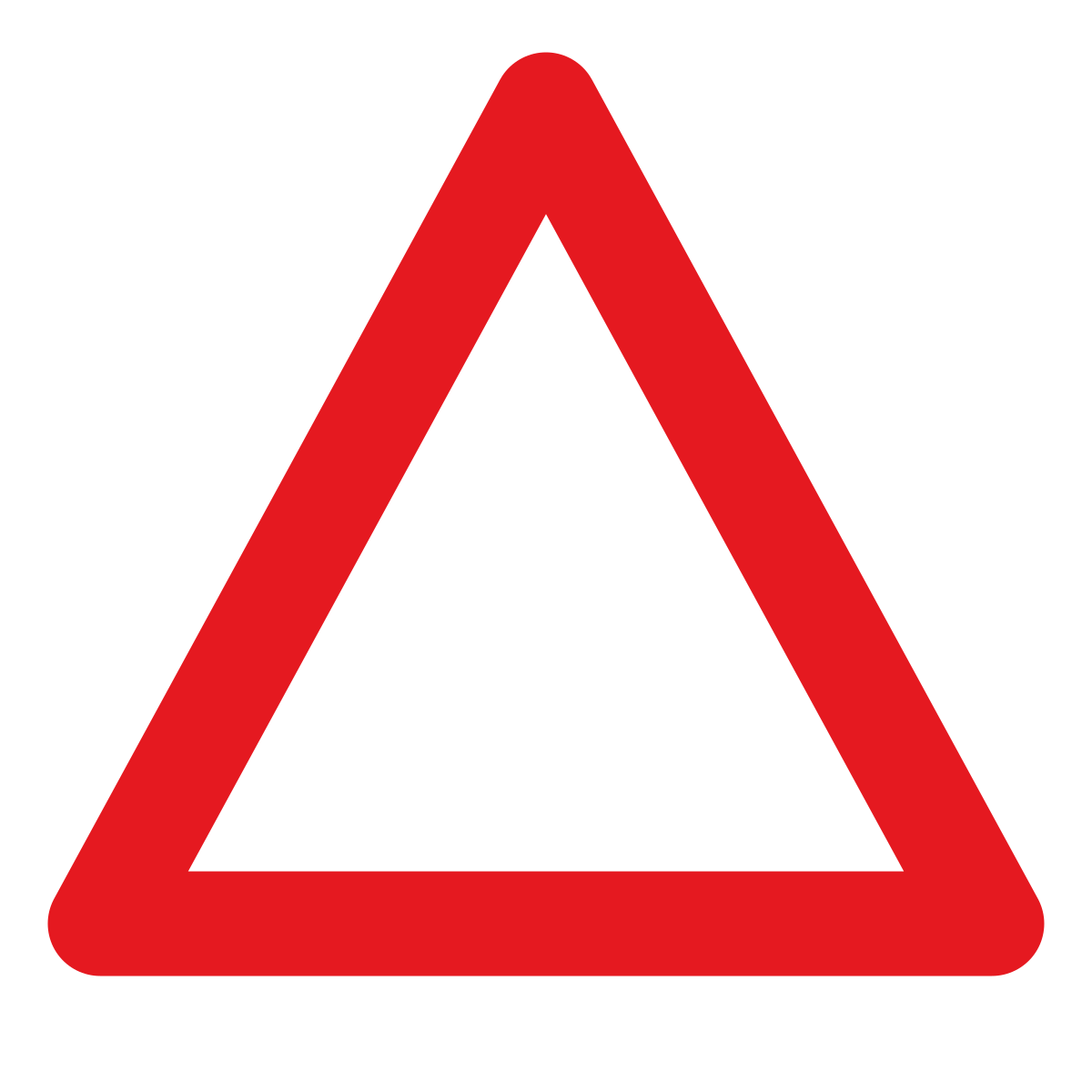
"Emergency stop"
A white equilateral triangle with a retroreflective surface, pointing upwards and bordered in red (side length: 450–550 mm; border width: 40–50 mm). In the cases specified in point 23 of the Rules, it may also be used outside the vehicle.
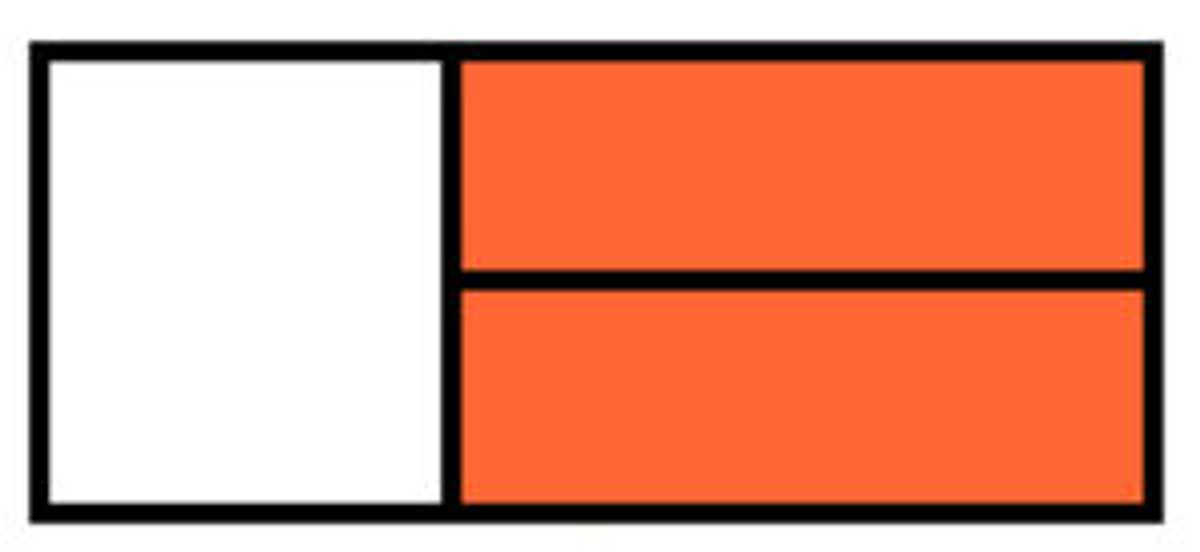
"Dangerous goods"
Installed on the front and rear of vehicles carrying dangerous goods. It is a 690 × 300 mm rectangle: the right-hand 400 × 300 mm portion is orange and divided lengthwise into two equal parts, while the left-hand portion is white with a 15 mm black border. The sign carries markings describing the hazardous properties of the load.
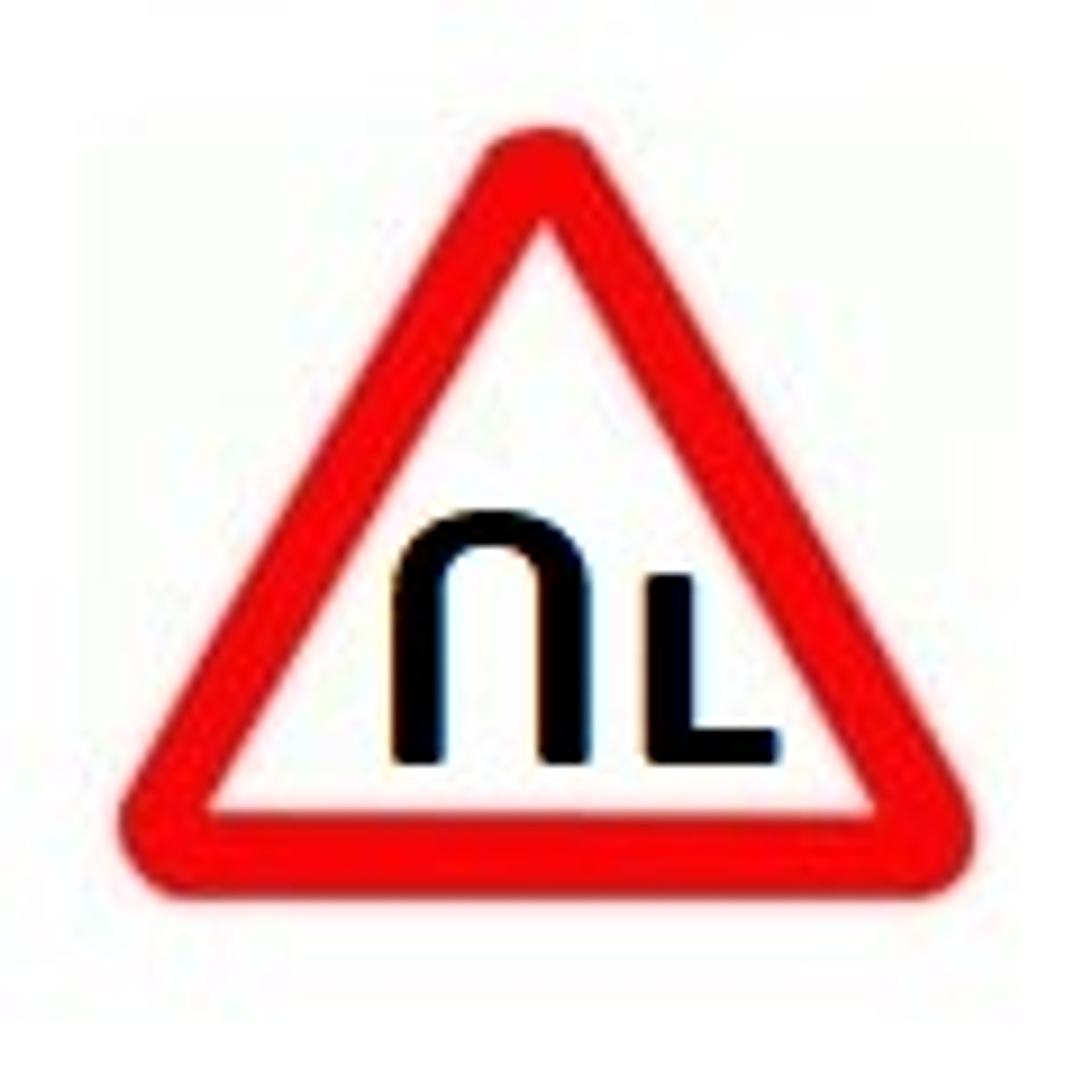
"Training vehicle"
Installed on the front and rear of motor vehicles used for driver training. It is a white equilateral triangle with a red border and the black Armenian letter “ՈՒ” (side length: at least 200 mm; border width: one tenth of the side). A double-sided sign may be installed on the roof of a passenger car.

"Medical practitioner"
At the driver’s discretion, may be installed on the front and rear of a vehicle driven by a physician. It is a blue square containing a white circle and a red cross (side length: 140 mm; circle diameter: 125 mm; cross-arm width: 25 mm; cross-arm length: 90 mm).
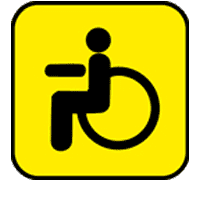
“Person with a disability”
At the driver’s discretion, may be installed on the front and rear of motor vehicles driven by persons with Group I or Group II disabilities, or by persons with severe or profound functional limitations, and on vehicles transporting such a person with a disability or a child having the status of a child with a disability. It is a yellow square bearing the symbol of sign 8.17 “Persons with disabilities” (side length: 150 mm).